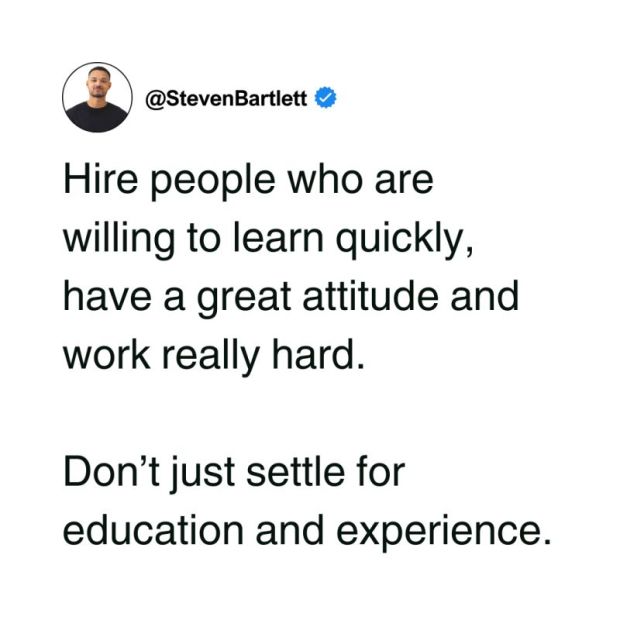
In a world still clinging to the benchmarks of the old Knowledge Economy, Steven Bartlett stands as a loud, successful contradiction to the traditional rules of hiring. Bartlett, a 33-year-old British entrepreneur and the youngest-ever investor on BBC’s Dragons’ Den, recently shared a clear directive for modern leaders: “Hire people who are willing to learn quickly, have a great attitude and work really hard. Don’t just settle for education and experience.”
This philosophy isn’t just a trend; it is the practical application of the shift toward a personality-driven market.
Moving Beyond the “Knowledge” Trap
The traditional Knowledge Economy values specialized skills and degrees above all else. However, as the book The Personality Economy explains, the rapid advancement of artificial intelligence and digital tools has made information and technical knowledge easily accessible to everyone.
Bartlett himself is a prime example of this decline in the value of traditional education. His CV lists his education simply as “Dropout”. Despite this, he launched Social Chain AG at 21 and took it public with a market cap of approximately $300 million by the age of 27. His success was driven not by a certificate, but by entrepreneurship, marketing savvy, and social media expertise—qualities that are difficult for machines to replicate.
Why Attitude Wins in the New Economy
When Bartlett argues for prioritizing “learning speed” and “attitude,” he is identifying the core components of the Personality Economy:
- Emotional Intelligence (EI): The ability to build relationships and communicate effectively is now a key differentiator in the job market.
- Adaptability: As technology automates data analysis and research, the human value lies in being flexible and creative in how we solve problems.
- Authenticity: Bartlett’s personal brand is built on being a “media owner” and “media IP” creator. In this new paradigm, individuals are hired for their overall “package” of personality and experience rather than just their qualifications.
A Skeptical Look at the “Attitude Only” Approach
While Bartlett’s stance is compelling, a rigorous analysis requires us to look at the gaps in this logic.
- The Measurement Gap: Education and experience provide a measurable baseline of discipline and foundational knowledge. How do we objectively measure “great attitude” or “hard work” during a 45-minute interview without falling into the trap of hiring for “cultural fit,” which can often lead to a lack of diversity?
- Domain Necessity: While attitude is vital in marketing or social media, certain industries—like medicine or engineering—cannot yet bypass formal education for “willingness to learn.”
- The Burden of Training: Hiring for potential means the organization must have the resources to train. If a company is in a high-pressure “scale-up” phase, it may not have the luxury of waiting for a “fast learner” to catch up.
Preparing Your Organization
Bartlett’s companies, such as Chapter 2, specifically focus on helping companies hire the right people more efficiently. This aligns with the advice for HR professionals in the Personality Economy: recruitment processes must evolve to assess soft skills like creativity and emotional intelligence alongside traditional qualifications.
By focusing on the unique human qualities that AI cannot automate, leaders can build teams that are not just knowledgeable, but truly irreplaceable. Steven Bartlett didn’t wait for the economy to change; he built his success on the very principles that are now reshaping the future of work.
 The Personality Economy